About Orderly
We spent 15 years in restaurants before we wrote a line of code
All three of us worked in restaurants -- from bussing tables to managing shifts at Michelin-level kitchens. We spent years watching the same problem repeat itself: customers wait too long to order, servers are stretched thin, and the data that could make a restaurant smarter never gets captured.
Eating out still relies on staff to take every order. It is slow, error-prone, and costs restaurants hundreds of thousands of dollars a year in labor and lost throughput. We knew voice AI had finally become reliable enough to handle real-world ordering -- natural speech, noisy rooms, menu modifiers, allergy flags, the whole complexity of an actual meal.
So we built Orderly: a system where customers scan a QR code at the table and speak to an AI to order, customize items, and pay -- without waiting for staff. Restaurants get higher order values, lower labor costs, and structured data on every customer preference.
We started by walking into restaurants with a laptop and running live demos on the spot. Most early customers converted the same day after watching Orderly handle real orders with real customers. Within three weeks, we had seven paying restaurants on three continents and $170K in contracted ARR.
Restaurants are our wedge into a broader category of voice-driven commerce. We have already expanded into a salon in Dubai, where voice ordering keeps staff focused on their craft while increasing customer throughput. We expect the same infrastructure to power ordering and scheduling anywhere customers interact with physical businesses.
What we believe
Ordering is broken
The core interaction in hospitality -- placing an order -- has not changed in decades. Static menus and overworked servers are the norm. We think every order should be a conversation.
Voice is the natural interface
People do not think in clicks and dropdowns. They think in words. Voice lets us upsell, personalize, and adapt dynamically in ways static menus and kiosks never will.
Data should flow back to operators
Traditional POS systems capture what was sold but not how it was ordered. We capture modifiers, preferences, hesitation, and reorders -- the signals that actually help a restaurant improve.
No new hardware
Every solution that requires installing tablets or kiosks at tables is fighting adoption. Our product runs on the device customers already have in their pocket.
Timeline
April 2023
Math and Bodhi meet at Cal Day, UC Berkeley.
Summer 2024
Ananya and Bodhi connect at a NYC tech event while Ananya is interning at Meta.
January 2026
The three founders start building Orderly full-time from Berkeley.
Week 1
Walk into restaurants with a laptop. First live demo converts same-day.
Week 2
Seven paying restaurants across the Philippines, India, and the United States.
Week 3
Signed a salon in Dubai. Proof this works beyond restaurants, beyond one country.
Today
$170K in contracted ARR. Dozens of orders processed daily across three continents.
Founders
Everyone writes code. None of the product was built by a non-founder.
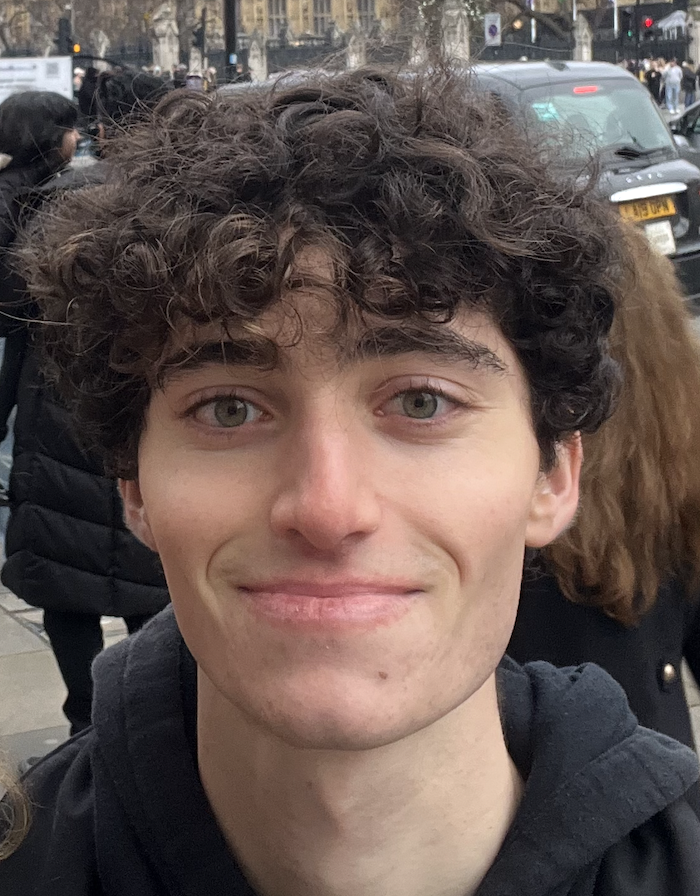
Bodhi Silberling
CEO
CS at UC Berkeley. ML researcher at BAIR and Berkeley RISE Lab. AI Fellow at Felicis, Fellow at ODF and Contrary. Previously at BCG, Harvard Business School, Unity, and the U.S. House of Representatives.
LinkedIn
Math Heramia
COO
CS and Finance at UC Berkeley. Intern at Wischoff Ventures ($80M AUM), incoming investor at Lead Edge Capital ($5B AUM). Summer Associate at BCG. Angel investor since 2021.
LinkedIn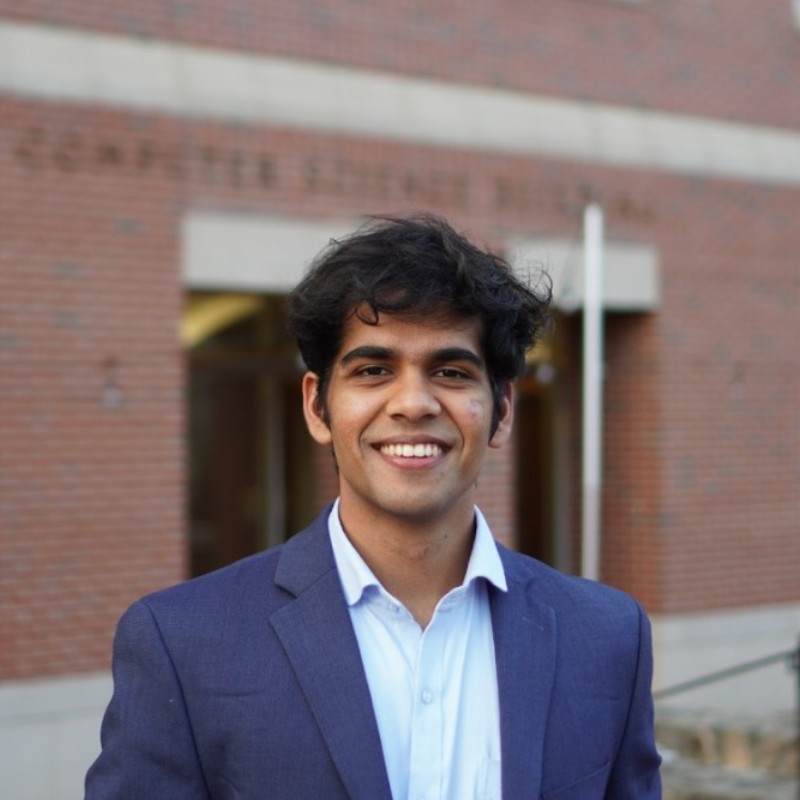
Ananya Garg
CTO
Software Engineer at Meta Superintelligence Labs. Engineering Fellow at Kleiner Perkins. Former SWE at Imprint and Costco. Research in generative 3D and ML at UNC Chapel Hill. President of ACM.
LinkedInThe market
$5B
US restaurant ordering TAM
$25B+
US restaurant ops TAM
$50B+
Global opportunity with horizontal expansion
We charge restaurants $2K per month per location. Every 1,000 locations is $24M ARR. Restaurants are the wedge -- the data moat and expanding model capabilities let us grow into full revenue operations across hospitality and other physical service businesses.
Work with us
Whether you run a restaurant, invest in the space, or want to join the team -- we would love to hear from you.